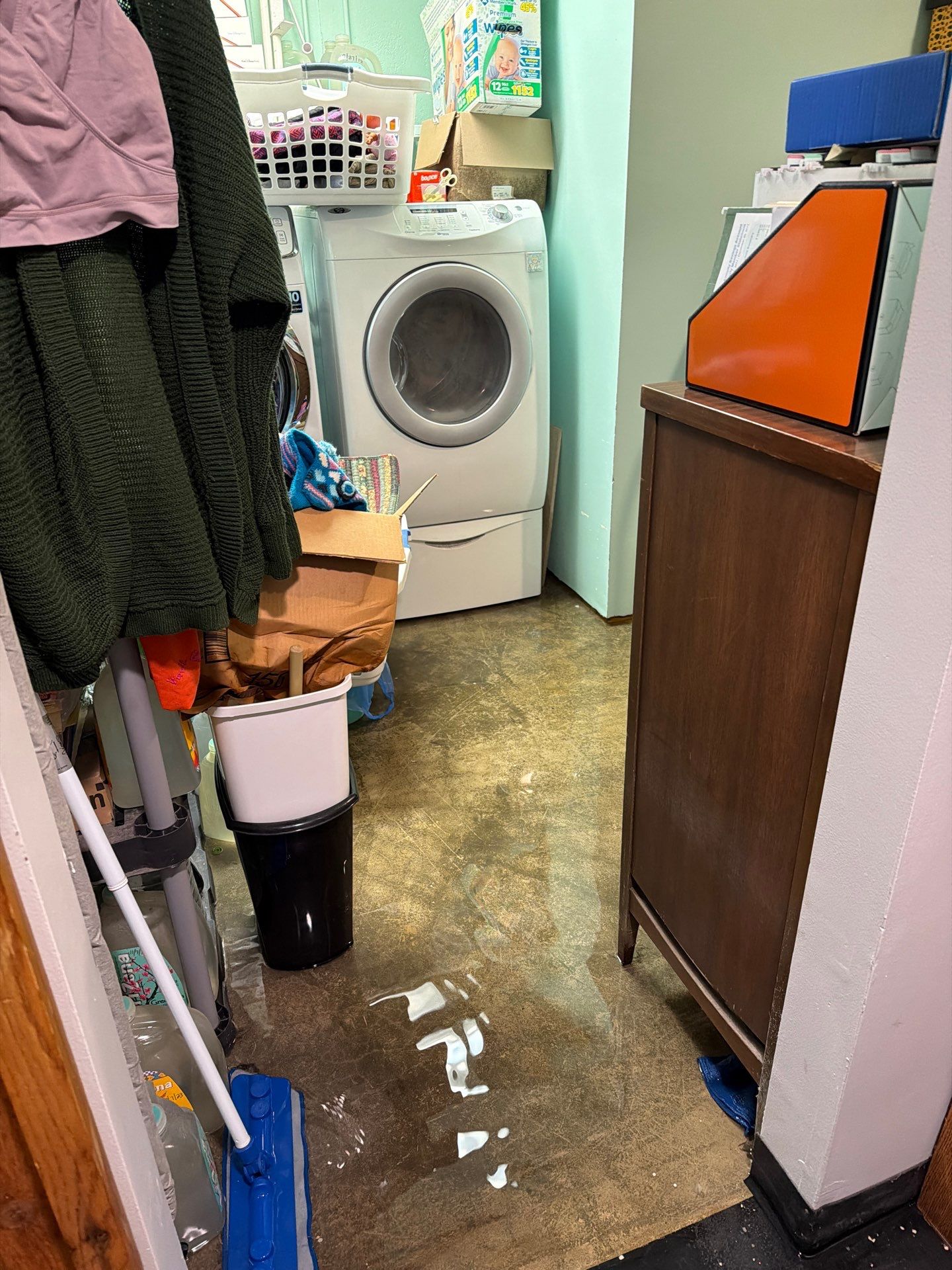
Before You Decide: What Most Williamsport Homeowners Get Wrong About DIY
The biggest misconception is that visible dryness equals actual dryness. A towel dried carpet can still hold 40 to 60 percent moisture in the pad below, and the subfloor underneath can stay saturated for weeks. Moisture migrates sideways through drywall, wicks up studs, and pools inside wall cavities where no fan will reach it. By the time you see staining or smell mildew, you are already past the 48 to 72 hour window where mold begins colonizing wet materials, and the repair scope has shifted from drying to demolition.
The second misconception is that all water is the same. IICRC standards divide losses into Category 1 (clean water from a supply line), Category 2 (grey water with contaminants like a washing machine discharge or aquarium), and Category 3 (black water from sewage, toilet overflows past the trap, or outdoor flooding). DIY is only defensible for small Category 1 events caught immediately. Anything else carries pathogens, requires antimicrobial treatment, and in some cases legally requires controlled disposal of porous materials. It is also worth noting that Category 1 water can degrade into Category 2 within 24 to 48 hours if it sits in contact with dust, drywall paper, or organic debris, which means a clean leak you ignored over a weekend is no longer a clean leak by Monday morning.
The third misconception is that homeowners insurance will reimburse you the same whether you DIY or hire a pro. It will not. Adjusters want moisture readings, psychrometric logs, drying chamber documentation, and itemized scope sheets. A shoebox of receipts and a few phone photos rarely supports a full claim payout.
The Comparison: DIY vs Professional Water Damage Cleanup
| Factor | DIY Cleanup | Professional Restoration (Williamsport Water Restoration) |
|---|---|---|
| Appropriate Water Category | Category 1 only, small spill under 10 sq ft, contained to hard surface | All categories, including Category 2 and 3 contamination, sewage, and storm intrusion |
| Detection of Hidden Moisture | Visual inspection, hand on drywall, no instrumentation | Thermal imaging, penetrating and non penetrating moisture meters, hygrometers |
| Water Extraction Capacity | Shop vac, 5 to 15 gallons per hour, surface water only | Truck mount and portable extractors, 100 plus gallons per hour, pulls from pad and subfloor |
| Drying Equipment | Household box fans, dehumidifier from the hardware store | Commercial air movers, LGR dehumidifiers, injection drying systems for wall cavities |
| Typical Drying Time | 5 to 14 days, often incomplete | 3 to 5 days with daily moisture verification |
| Mold Risk After Cleanup | High, especially in walls, subfloors, and under cabinetry | Low, antimicrobial applied, moisture verified to industry standards |
| Insurance Documentation | Receipts and photos, often rejected or reduced | Full Xactimate scope, moisture logs, photo documentation submitted directly to adjuster |
| Health and Safety | Homeowner exposed to contaminants, electrical hazards, unknown pathogens | PPE, containment, lockout procedures, trained technicians |
| Structural Repairs Included | Separate contractor needed afterward | Mitigation and reconstruction coordinated under one project |
| Typical Out of Pocket Cost | $150 to $600 in supplies, plus $3,000 to $15,000 in secondary damage if drying fails | $1,500 to $7,500 average, often covered by insurance minus deductible |
| Response Time in Williamsport | Immediate but limited in scope | Crew dispatched in most cases within 2 hours, 24 7 |
What the Table Actually Tells You
Look at the cost row carefully. The DIY column is not cheaper when you account for failure rate. A homeowner who spends $400 on fans and a rental dehumidifier but misses moisture in the wall cavity is looking at drywall removal, insulation replacement, mold remediation, and flooring replacement two months later. That secondary event almost never qualifies for insurance coverage because the original loss was not documented, and the carrier will argue the damage resulted from neglect rather than the initial event. We have walked into homes in Williamsport where a $300 DIY attempt turned into a $12,000 mold remediation. That is the real math.
The detection row matters just as much. Water follows the path of least resistance, which means it rarely stays where you can see it. We have pulled baseboards in Williamsport basements where the visible water was a 3 foot puddle and the actual moisture footprint behind the wall was 18 feet long. Without thermal imaging and pin meters, you cannot find that. You also cannot dry what you cannot find, which is why we publish a detailed professional drying timeline for homeowners trying to understand what realistic restoration looks like.
The insurance row deserves a second read. Most Williamsport policies cover sudden and accidental water damage, but the burden of proof is on the homeowner. Without daily moisture logs and a documented scope of work, adjusters routinely reduce claims by 30 to 50 percent. If you are filing, the documentation alone is worth hiring a certified restoration contractor. We coordinate directly with adjusters and provide the package they need, which is also why we wrote our guide on how to file a water damage insurance claim.
The Hidden Health Cost of Incomplete Drying
The health row in the table is the one homeowners underestimate the most. Damp building materials do not just grow mold, they also release elevated levels of VOCs from wet adhesives, particleboard, and carpet backing. Families with asthma, infants, elderly residents, or anyone immunocompromised can develop respiratory symptoms within days of a poorly dried loss. We have seen Williamsport homeowners chase a persistent cough for months before realizing the cause was a kitchen leak they thought they had handled. Professional drying is not just about saving materials, it is about restoring the indoor air quality of the space your family breathes every night.
When DIY Is Actually Fine
A cup of water knocked off the counter. A clean supply line drip caught within 2 hours. A small ice maker leak on tile that has not reached the cabinet kick. Those are reasonable DIY situations. Wipe, dry, monitor for two days, and you are done. If you see staining, smell anything musty, hear creaking floors, or the water touched carpet, drywall, or cabinetry, the math changes. When in doubt, a free moisture inspection from Williamsport Water Restoration costs nothing and gives you real readings instead of guesswork, which is almost always the smarter first call.