Plumbing Leak Repair in Williamsport: The Process in 7 Steps
Every job runs through the same backbone. The variables are scope, materials, and how long the water sat.
- Stop the source. Shut off the main, or the local valve under the sink or behind the toilet.
- Document everything. Photos and video before anything moves. Your insurance adjuster will ask.
- Extract standing water. Truck-mounted or portable extractors pull free water before drying begins.
- Open the affected assemblies. Drill holes, remove baseboards, lift flooring, cut flood cuts at 12 to 24 inches where saturation requires it.
- Dry to IICRC S500 standards. Air movers, dehumidifiers, and daily moisture readings until materials hit dry standard.
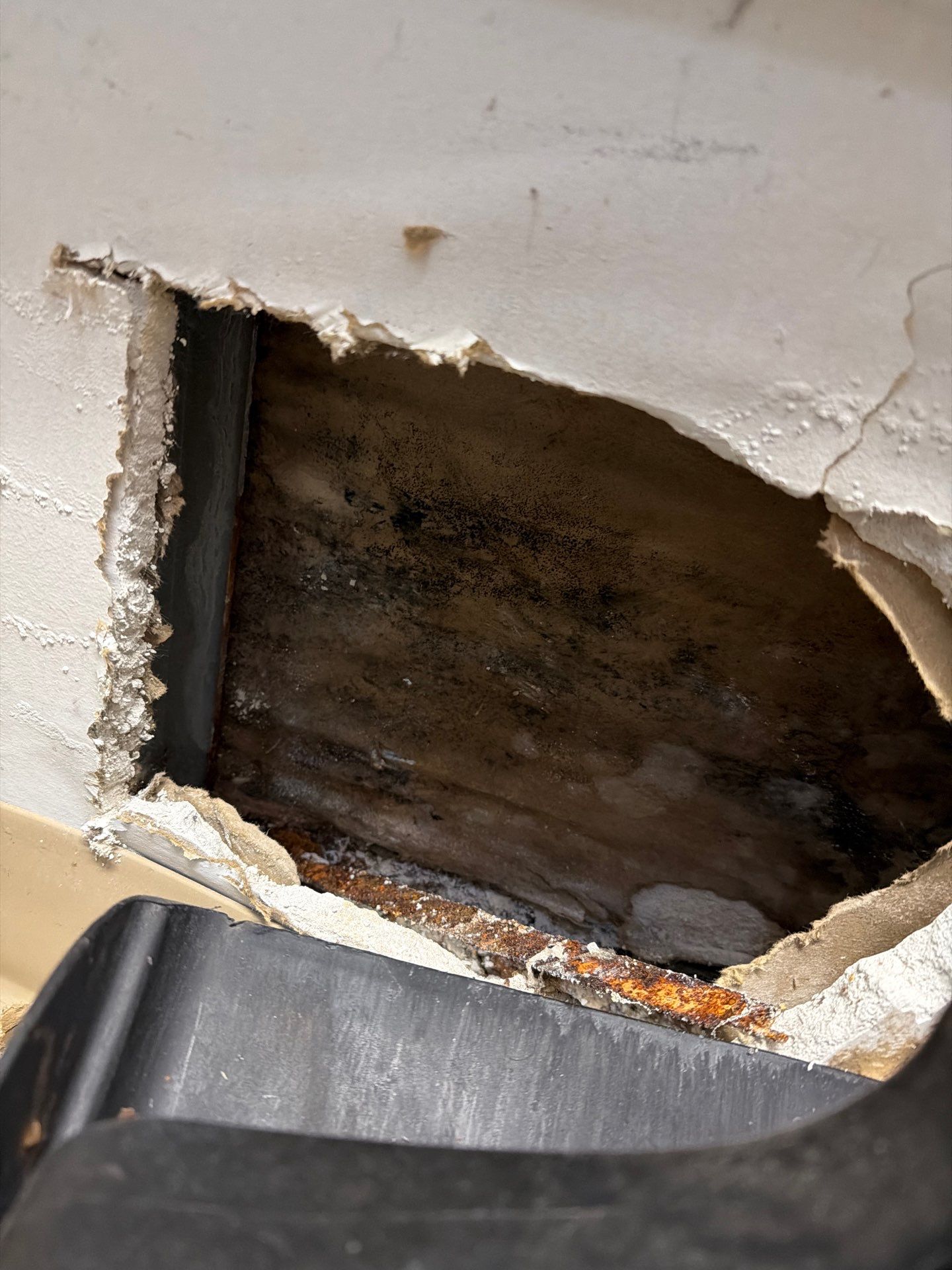
- Treat for microbial growth. EPA-registered antimicrobials applied to wall cavities and subfloor.
- Rebuild. Drywall, insulation, paint, flooring, trim, and finish carpentry back to pre-loss condition.
Signs Your Williamsport Walls Have Hidden Plumbing Damage
You will notice some of these. Others only show up on a moisture meter.
- Bubbling, peeling, or soft drywall paint
- A musty smell near a bathroom, laundry, or kitchen wall
- Warm or cold spots on flooring that should not have them
- Unexplained spike in your water bill
- Stained baseboards or trim pulling away from the wall
- Visible tide lines on drywall, even faint ones
- Hardwood cupping, crowning, or buckling along seams
- Nail pops or screw pops appearing on ceilings below a bathroom
- Hollow sounds when you tap baseboards that used to feel solid
- Insects (ants, silverfish, roaches) congregating in one wall area
If two or more of these show up at once, do not wait. Our team uses thermal imaging and pin meters to map the actual saturation. For a deeper walkthrough of detection, see our guide on water damage behind walls and hidden leak detection.
Why Williamsport Homeowners Call Williamsport Water Restoration
- IICRC certified technicians on every job
- BBB A+ rated, family-owned since 2018
- 24/7 emergency dispatch across central Indiana
- Direct insurance billing and adjuster coordination
- Honest scope. If you do not need a full rebuild, we say so
- Written drying logs and moisture maps for every claim
- One project manager from first call through final walkthrough
- Lifetime workmanship warranty on reconstruction
Wall Repair: What Actually Gets Removed and Replaced
Drywall is gypsum sandwiched between paper. Once it gets wet for more than 48 hours, it loses structural integrity and grows mold on the paper backing. We do not gamble with that.
- Flood cuts. Standard 12 inch or 24 inch horizontal cuts above the waterline.
- Insulation removal. Wet fiberglass and cellulose come out. Both hold water and feed mold.
- Stud and bottom plate drying. Framing is dried in place, not replaced, unless rot is present.
- Vapor barrier inspection. Pulled back to confirm dryness behind it.
- Antimicrobial fog or spray. Applied before the wall is closed.
- New drywall, tape, mud, texture, paint. Matched to your existing finish.
- Electrical box check. Outlets and switches in flood-cut walls are inspected and replaced if corroded.
What You Can Do Before We Arrive
If you called us already, you have about 30 to 60 minutes of useful work to do.
- Shut off water at the source or main
- Cut power to affected rooms at the breaker if safe
- Move furniture, rugs, and electronics out of standing water
- Pull up loose area rugs and hang them to drip
- Place foil or wood blocks under furniture legs on wet floors
- Do not use a household vacuum to remove water
- Do not lift tacked-down carpet yourself
- Start a photo log with timestamps
- Pull books, papers, and fabric items off lower shelves
- Open windows if outside humidity is lower than indoor
- Locate your insurance policy number and claim phone line
What This Costs in Central Indiana
Ranges below are realistic for Williamsport and surrounding areas. Your actual quote depends on square footage, water category, and material grade.
- Emergency extraction and setup: $500 to $1,500
- Structural drying (3 to 5 days): $1,500 to $4,500
- Drywall repair per affected wall section: $400 to $1,200
- Subfloor replacement per room: $800 to $2,500
- Hardwood refinish or replacement: $6 to $14 per square foot
- Full mitigation plus reconstruction average: $3,500 to $12,000
Most homeowners insurance policies cover sudden and accidental plumbing leaks. Slow, long-term leaks are often denied. We document moisture mapping in a format adjusters accept, which speeds approval. If you want a full breakdown of how pricing works, our water damage restoration cost guide walks through line items.
Mistakes That Make the Repair Worse
We see the same handful of well-meaning errors on call after call. Avoid these.
- Running the HVAC on full blast. Spreads moisture and mold spores through every duct in the house.
- Box fans pointed at wet walls. Without a dehumidifier, you just move humid air around and feed mold.
- Painting over stains before drying is verified. The moisture is still there. The paint will bubble again in a week.
- Tossing wet materials before the adjuster sees them. Your claim payout depends on documented loss.
- Waiting a few days to see if it dries on its own. Mold colonies form between 24 and 72 hours after saturation.
- Using bleach on porous materials. It removes color but does not kill mold rooted in drywall paper.
Common Plumbing Leak Sources We See in Williamsport
Not every leak is dramatic. A lot of the damage we repair started as a slow drip behind a wall for months.
- Supply line failures. Toilet supply lines, ice maker lines, and washing machine hoses. These run under pressure 24/7.
- Drain line cracks. PVC joints under sinks and tubs that let go after years of thermal cycling.
- Shower pan leaks. The pan liner fails and water wicks into the subfloor below, often showing on a downstairs ceiling first.
- Pinhole copper leaks. Older copper supply lines develop pitting and weep into wall cavities.
- Pex fitting failures. Crimp rings that were never set correctly slowly back off and spray.
- Water heater tank rupture. 40 to 50 gallons hits the floor in minutes. Garages and utility closets are the usual spots.
- Frozen pipe breaks. Central Indiana winters split exterior wall plumbing every January.
Floor Repair: Save It or Replace It
This is where most Williamsport homeowners ask the hard cost question. The answer depends on the flooring type and how long it sat wet.
- Solid hardwood. Often salvageable with mat drying systems if caught in 24 to 48 hours. After that, replacement is usually cheaper than refinishing cupped boards.
- Engineered hardwood. Lower save rate. The plywood core delaminates fast.
- Laminate. Almost always a full replacement. The fiberboard swells and does not recover.
- LVP and vinyl plank. Water-resistant on top, but water trapped underneath ruins the subfloor and grows mold.
- Tile. Tile itself survives. Grout, thinset, and subfloor below may not.
- Carpet and pad. Pad almost always gets replaced. Carpet can sometimes be saved on clean-water Category 1 losses.
For a specific deep dive, our post on hardwood floor water damage: save or replace covers the math in detail.